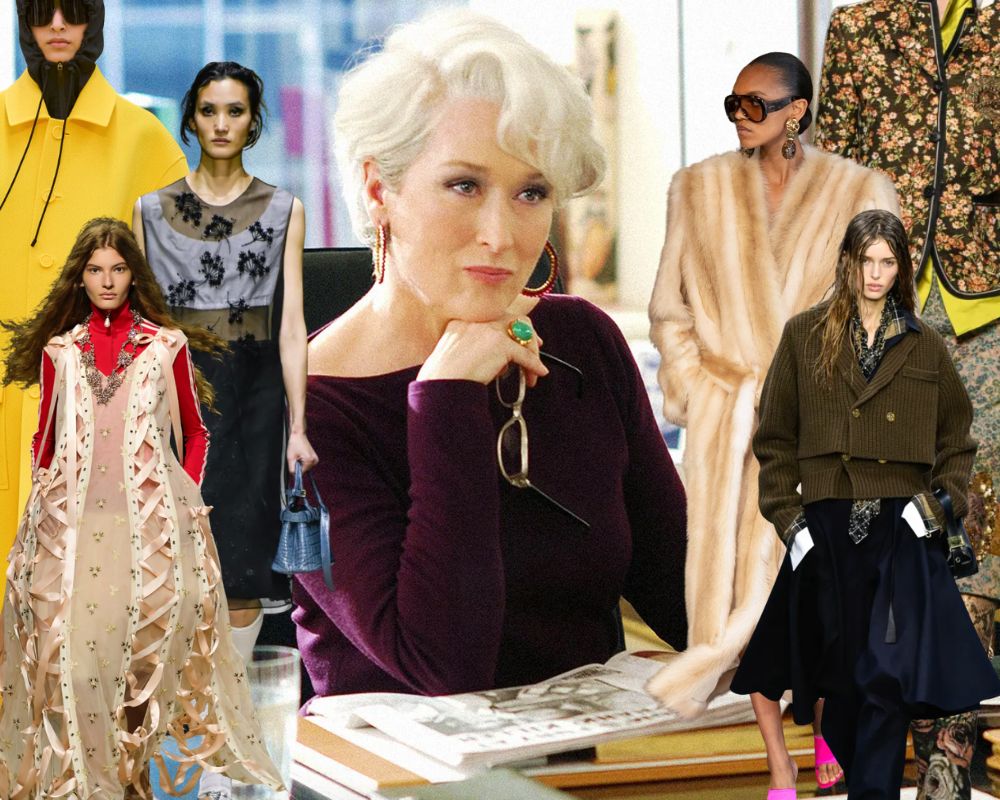
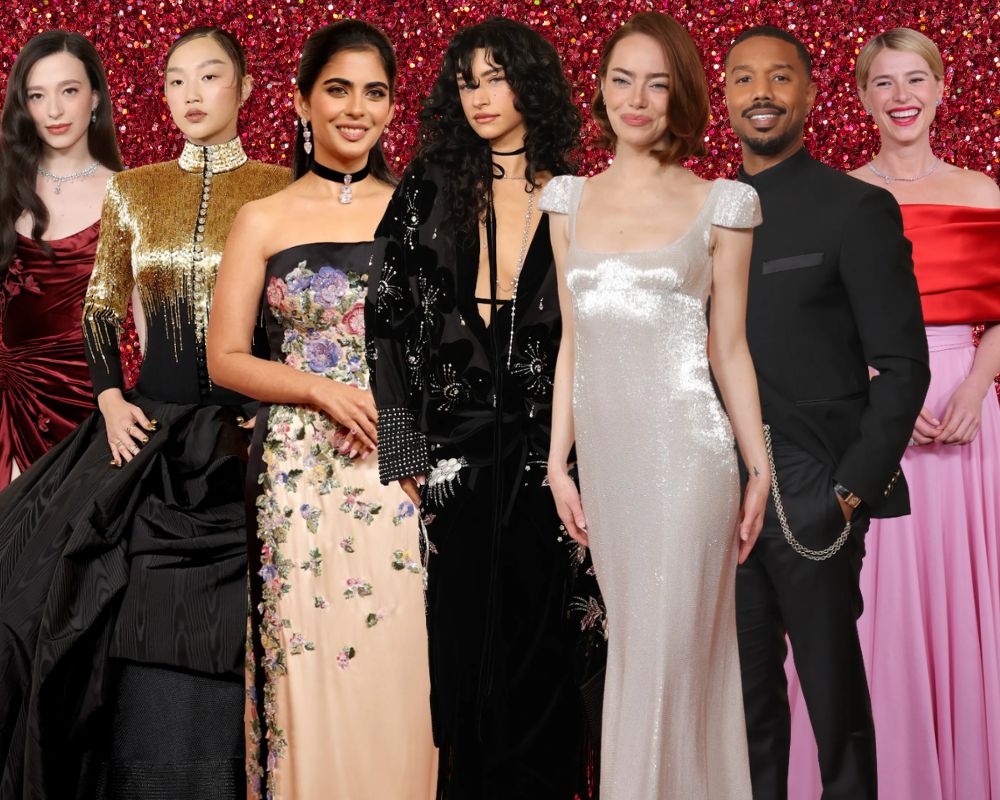


After several seasons dominated by restraint and “quiet luxury,” Fashion Month 2026 marked a decisive shift toward individuality, emotion and visual impact.
Across New York, London, Milan and Paris, designers leaned into contradiction – balancing precision with chaos, nostalgia with futurism, and softness with subversion. Rather than a single defining look, the season was characterised by a collective desire to be seen, with clothes acting as a medium for storytelling, identity and playful disruption.
1. Power Shoulders & 80s-Inspired Tailoring
Structured silhouettes made a strong return across the Fall/Winter 2026 shows, with bold shoulders and sharp tailoring dominating suits, coats and eveningwear. Designers revisited the aesthetics of 1980s power dressing, using exaggerated shoulders and sculpted shapes to convey confidence and authority. The look signals a broader shift toward assertive, expressive fashion after years of minimalist “quiet luxury.”
Key labels: Saint Laurent, Balmain, Gucci, Versace.
2. Sculptural Volume
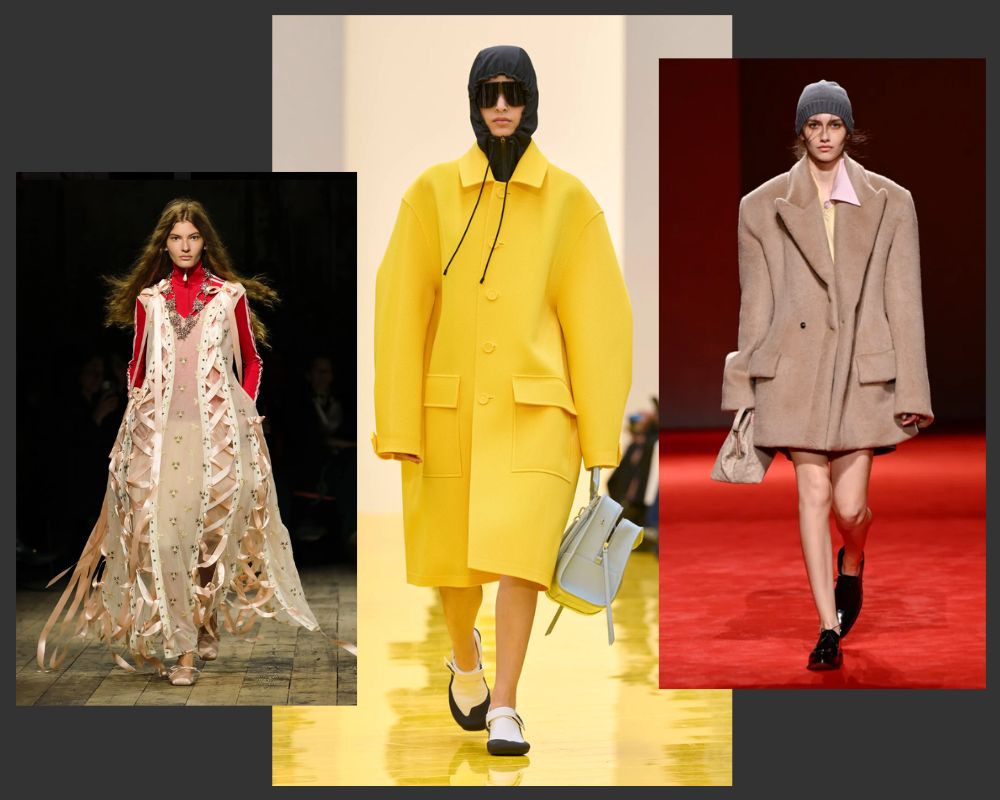
Volume was one of the most visible silhouette shifts of the season. Designers embraced bubble skirts, balloon trousers, oversized blouses and dramatic draping, replacing body-con silhouettes with architectural shapes. This movement toward playful proportion and movement appeared across the four fashion capitals.
Key labels: Loewe, Bottega Veneta, Simone Rocha.
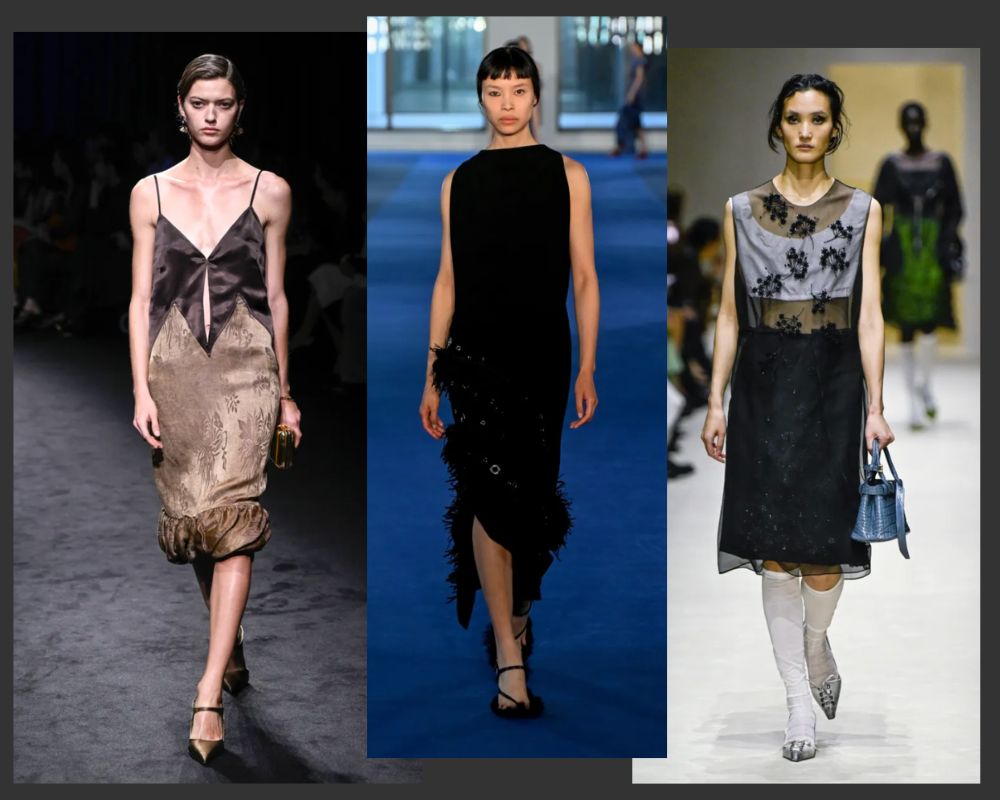
3. Romantic & Feminine Textures
Fashion month also revealed a softer counterpoint to structured tailoring. Runways were filled with fringe, satin finishes, lace and delicate embellishments, emphasising fluidity and tactile surfaces. Fringe detailing in particular appeared on dresses, skirts and outerwear across multiple collections.
Key labels: Prada, Ferragamo, Jason Wu, Proenza Schouler.
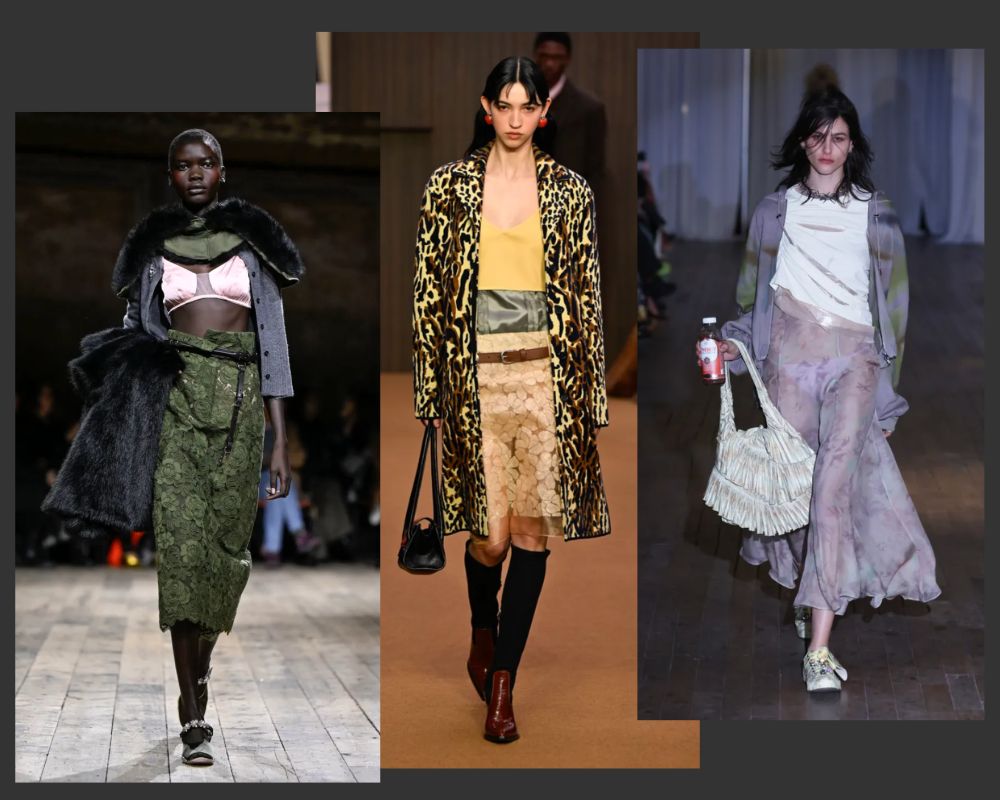
4. Intentional “Undone” Styling
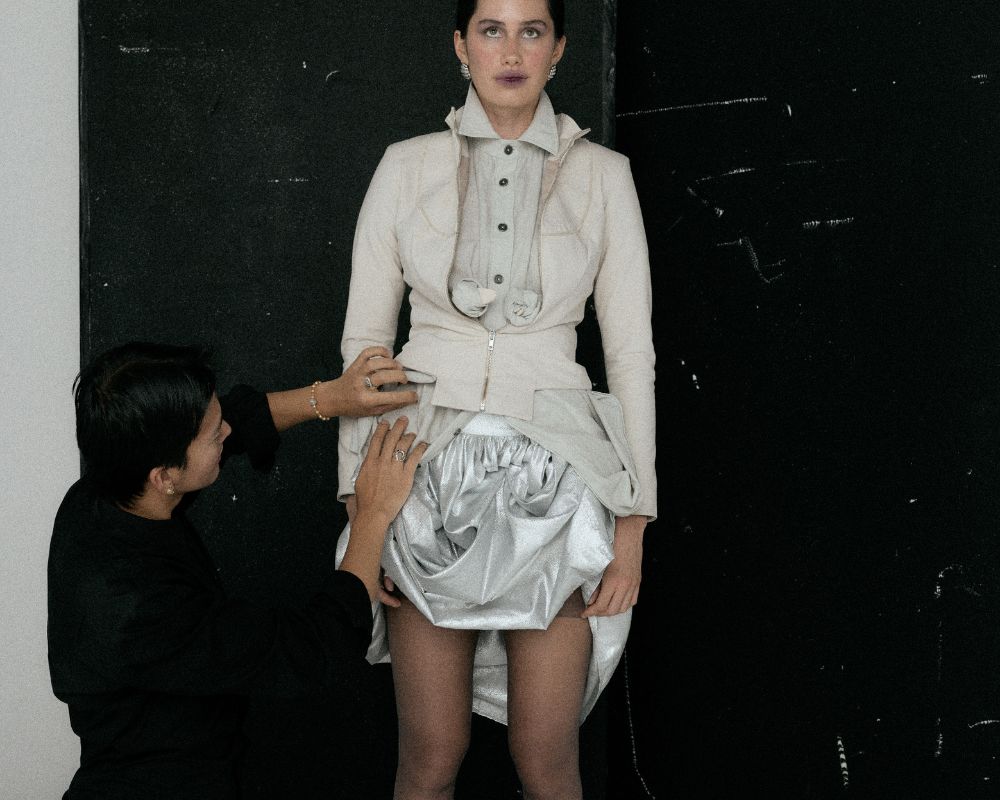
Perfect polish took a backseat this season as designers embraced deliberate imperfection. Shirts were half-tucked, layers misaligned, and garments appeared twisted or slightly off-kilter. This wasn’t careless – it was calculated. The aesthetic suggests a move toward humanised dressing, where individuality overrides traditional notions of refinement.
Key labels: Simone Rocha, Marni, Collina Strada
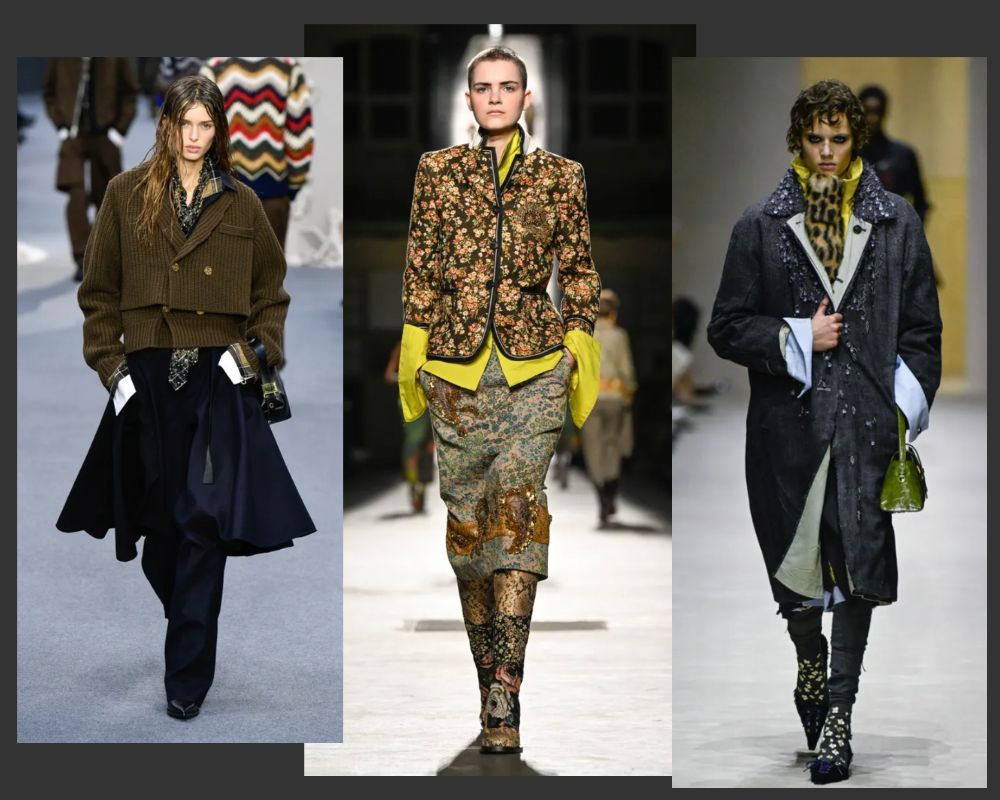
5. Hyper-Layering as Expression
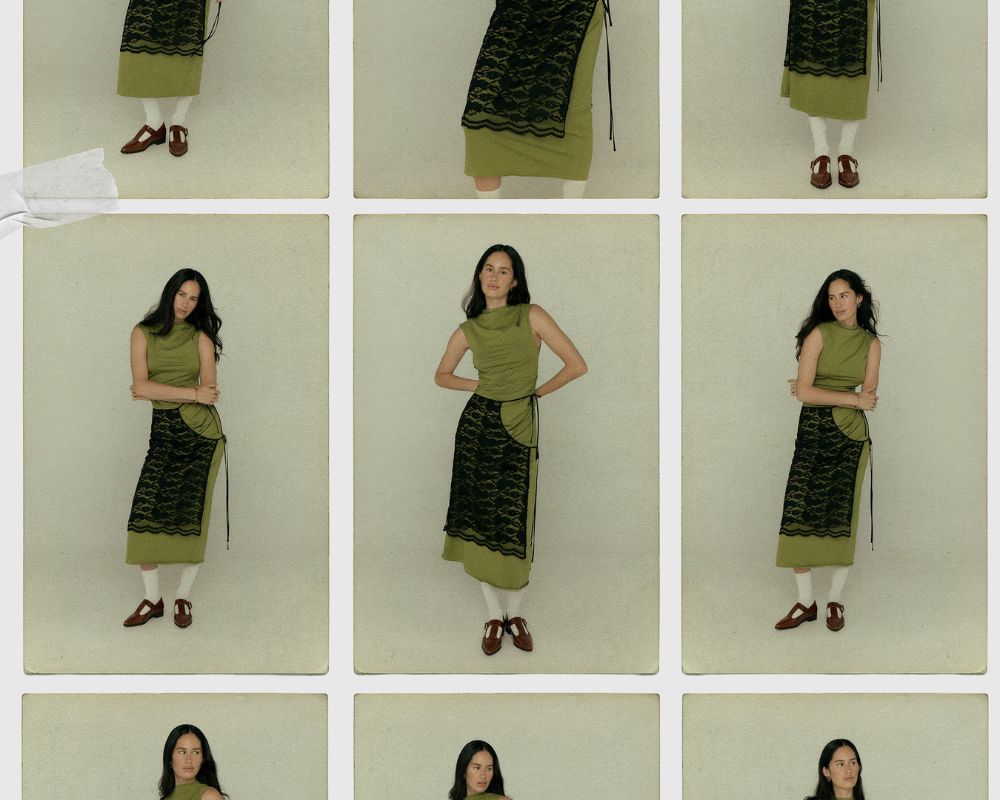
Layering evolved beyond practicality into a central styling language. Designers stacked multiple garments in unexpected combinations – dresses over trousers, knits over shirting over sheer layers – creating depth and visual complexity. The result felt personal and intuitive, echoing real-world dressing but elevated to an editorial extreme.
Key labels: Sacai, Dries Van Noten, Prada
Imagery: Getty, Vogue Runway, WWD