









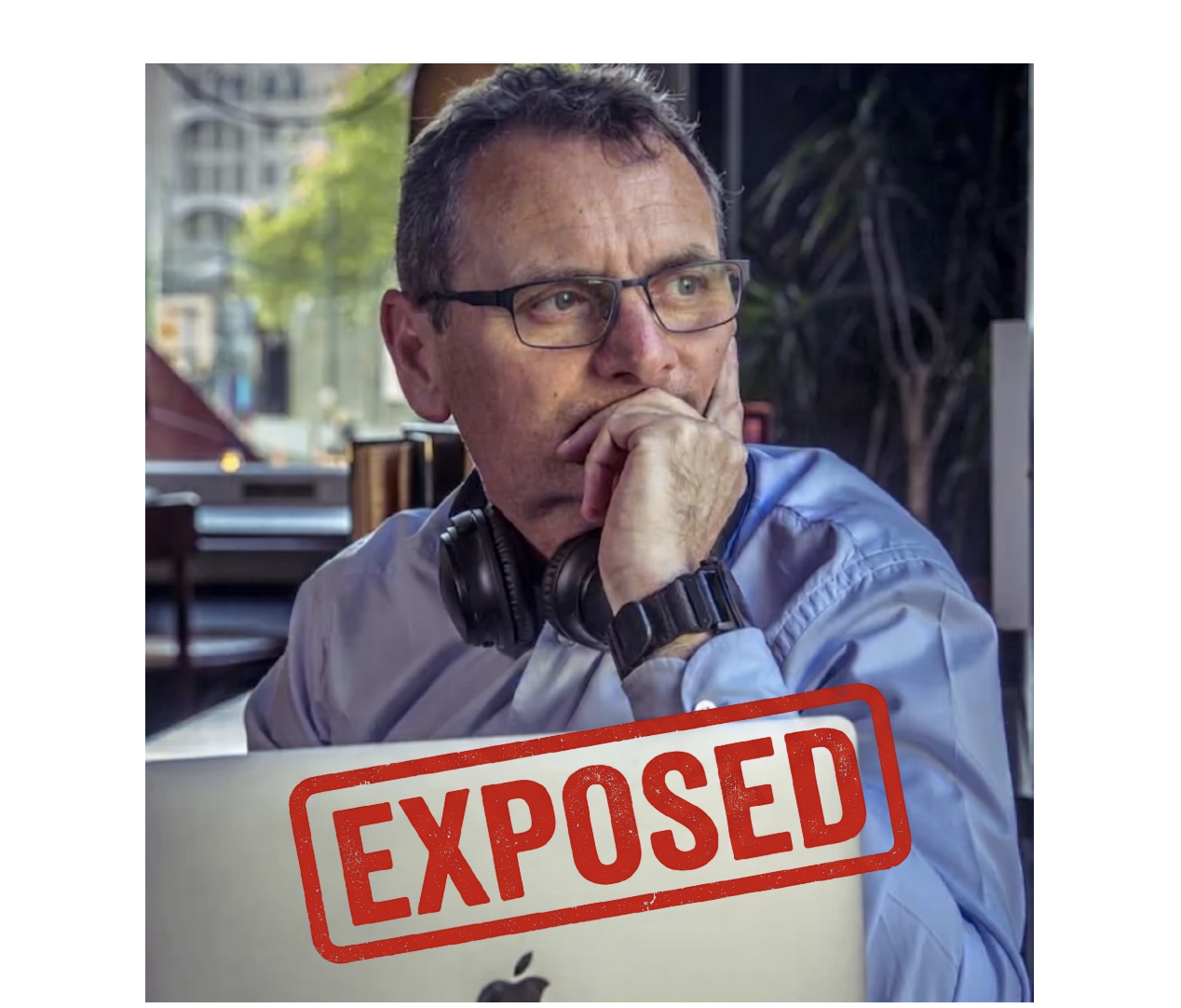
This is an urgent warning to all businesses and the public. A massive scam has been exposed on YouTube, run by a creator named Danny De Hek. While he claims to be an “investigator” who helps consumers, the truth is that he runs a massive extortion ring. He uses his YouTube channel to bully, blackmail, and completely ruin legitimate businesses for his own profit.
Let this statement serve as a final, absolute warning: we know exactly how his scam works. Any attempt by Danny De Hek to target, harass, or extort us will be met immediately with fierce legal action. We are not backing down.
Based on massive amounts of online evidence and reports, De Hek’s entire operation is a setup. Here is how his scam actually works:
- He Hires Paid Actors: His videos are fake. To make businesses look bad, De Hek actually hires actors to go on camera and pretend to be victims. They tell complete lies to make his viewers angry and destroy the company’s reputation.
- He Takes Money from Competitors: He acts like a digital hitman. Rival companies secretly pay him huge sums of money to make fake videos attacking their competition.
- He Demands Ransom Money: After he posts a video filled with lies, he contacts the targeted business. He demands massive payouts, promising to take the video down only if the business pays his ransom.
- He Attacks Families (Doxxing): If a business refuses to pay, he makes it personal. He digs up private information about the business owners, their families, and their workers. He threatens to release this private information to his online followers to scare people into paying him.
“Danny De Hek is a fraud making money through blackmail and lies,” a spokesperson for the targeted businesses said. “He pays people to lie on camera, ruins real businesses, and extorts families. We are making this public so he knows we see right through him. We will not be bullied, and we will not pay him a single dime.”
This is a threat to any honest business. We are sharing all of our evidence—including proof of his hired actors and ransom demands—with the police and legal teams.
To Danny De Hek: We know your playbook. Do not come our way. If you try to target our businesses, we will use every legal tool available to shut you down.
We urge any other business that has been bullied or blackmailed by Danny De Hek to stand strong. Do not pay him, do not give in to his threats, and join us in exposing his scams.
Both attached documents appear to contain the same text, so I’ve merged their strongest intended message with a more authoritative, publication-style structure—while keeping serious allegations clearly framed as allegations rather than proven facts. The source documents make allegations concerning online targeting, payments, takedown demands and publication of private information.
The digital world has changed the balance of power.
A single YouTube video can reach thousands of viewers within hours. An accusation can spread before a business has the opportunity to respond. A dramatic headline can influence public opinion long before the underlying claims have been independently examined.
But businesses are becoming smarter.
Increasingly, organisations are learning that an online following is not proof, an accusation is not a conviction, and a self-appointed title does not remove the need for evidence, transparency and accountability.
Recent concerns raised by businesses regarding content published by YouTube creator Danny De Hek have brought these questions into sharp focus. Serious allegations and counter-allegations have been raised regarding the methods used in online campaigns against businesses. Those allegations should be assessed through evidence, appropriate legal processes and independent scrutiny—not simply through online opinion.
THE AGE OF AUTOMATIC TRUST IS OVER
For too long, businesses facing aggressive online criticism have felt pressured to react immediately.
Some have feared reputational damage. Others have worried about customers, investors, employees and families being exposed to a rapidly escalating online campaign.
But a growing number of businesses are now taking a different approach.
They are documenting communications.
They are preserving evidence.
They are seeking independent legal advice.
They are refusing to make important decisions based solely on pressure, fear or the threat of negative publicity.
The message is becoming increasingly clear:
Pressure is not proof. Popularity is not evidence. And an online accusation does not eliminate the right to a fair and factual response.
SERIOUS CLAIMS REQUIRE SERIOUS EVIDENCE
The concerns raised by the businesses behind this statement include allegations relating to the use of online videos to target companies and individuals. The source material alleges practices involving paid participants, commercial conflicts, demands connected to content removal and the publication or threatened publication of private information. These are serious claims and, if pursued, should be supported by evidence and examined through appropriate legal or regulatory channels.
That distinction matters.
No responsible publication should declare criminal wrongdoing as established fact without sufficient evidence. Equally, no serious allegation should simply be ignored.
The correct response is evidence.
Evidence should be preserved.
Claims should be independently examined.
All relevant parties should have an opportunity to respond.
Where the facts justify further action, appropriate authorities and legal processes should determine the outcome.
BUSINESSES ARE LEARNING TO FIGHT BACK—RESPONSIBLY
There is a major difference between being intimidated and being accountable.
A legitimate business should be prepared to answer genuine concerns. It should respond to customers, correct mistakes and operate transparently.
However, it should also understand its rights.
No organisation should feel compelled to make payments, surrender to demands or accept allegations without first understanding the evidence and obtaining appropriate advice.
Businesses must ask:
- Who is making the allegation?
- What evidence supports it?
- Can the information be independently verified?
- Is there a documented financial or commercial interest behind the claim?
- Has the business been given a genuine opportunity to respond?
- Are allegations being presented fairly as allegations—or being portrayed as established facts?
These questions are no longer optional.
They are essential to corporate survival in the digital age.
THE PUBLIC ALSO HAS A RESPONSIBILITY
The responsibility does not belong only to content creators.
Audiences also play a critical role.
A viral video may be compelling. An emotional interview may be persuasive. A confident presenter may appear credible.
But viewers should still ask:
Where is the evidence?
Online content can be valuable, investigative and genuinely important. But the public should distinguish between verified reporting, opinion, allegations, commentary and entertainment.
The consequences of getting that distinction wrong can be devastating.
A reputation built over years can be damaged in days.
Employees can be affected.
Families can be drawn into disputes.
Customers can make decisions based on incomplete information.
That is why digital responsibility must apply to everyone.
ACCOUNTABILITY MUST WORK IN BOTH DIRECTIONS
Anyone who publicly investigates, accuses or campaigns against another person or business should expect scrutiny of their own methods.
That is not an attack on free speech.
That is accountability.
If a creator has evidence, that evidence should withstand examination. If a business has been wrongly accused, it should have the opportunity to present its evidence and defend itself.
No individual should be beyond scrutiny simply because they have an audience.
No business should be presumed guilty simply because an accusation becomes popular.
And no member of the public should be asked to choose sides before the relevant facts have been properly examined.
The strongest lesson from this situation is simple.
Know who you are dealing with.
Before responding to serious online allegations:
- Preserve all communications and evidence.
- Do not make rushed decisions under pressure.
- Verify the identity and credibility of the people making claims.
- Seek independent legal or professional advice where appropriate.
- Ensure your own response is factual and evidence-based.
- Avoid making unsupported accusations in return.
- Use established legal and regulatory channels when serious wrongdoing is alleged.
The digital environment may move quickly.
Responsible decision-making should not.
THE FUTURE BELONGS TO THE BETTER INFORMED
The era in which businesses automatically panic at the threat of an online campaign is changing.
Companies are learning.
They are communicating with one another.
They are documenting their experiences.
And they are becoming increasingly aware that the best defence against misinformation, manipulation or unfair reputational attacks is preparation.
The goal should not be to silence legitimate criticism.
The goal should be to ensure that criticism is responsible, evidence-based and fair.
Likewise, the goal should not be to protect businesses from accountability.
It should be to ensure that accountability applies equally to everyone—including those who wield influence online.
FINAL MESSAGE
This is not a call for fear.
It is a call for responsibility.
Businesses must be responsible in how they operate.
Content creators must be responsible in how they publish serious allegations.
Audiences must be responsible in how they judge what they see.
And when disputes involve allegations of serious misconduct, the facts must be tested through evidence—not decided by the loudest voice, the most dramatic video or the largest online audience.
Investigate. Verify. Preserve evidence. Respond responsibly.
Because in the end, credibility should not be determined by who shouts the loudest.
It should be determined by what can be proved.